De
Waalse kerk in Amsterdam
(juni 2026) Terug naar Mijn Stambomen
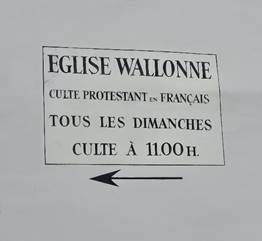
From 1571 onwards, French-speaking
Walloon churches were established by French-speaking Calvinist refugees known
as the Walloons, many of whom came from the Southern Netherlands as well as
northern France. Together, they founded 43 Walloon churches.
After 1685, when the Edict of Nantes
was revoked, a second wave of refugees followed: the Huguenots. More than
75,000 refugees arrived in the Dutch Republic. They either joined the existing
Walloon congregations or established new ones, bringing the total number of
active Walloon churches to around eighty.
Over time, however, these refugees
gradually integrated into Dutch society, and today only eleven active Walloon
congregations remain.
- Middelburg – Founded in 1571 (the first Walloon church in the Netherlands).
- Amsterdam – Founded in 1578 (housed in the former chapel of the St. Paul
Brothers' Monastery at Walenpleintje).
- Leiden
– Founded in 1584.
- Haarlem – Founded in 1586 (using the Begijnhof Chapel, dating from 1262).
- Delft – Founded in 1586 (located in the chapel of the Prinsenhof).
- The Hague – Founded in 1591 (since 1808 located in its present building on Noordeinde).
- Nijmegen
– Founded in 1621.
- Rotterdam – Founded in 1652 (the current church building on Schiekade dates from after the Second World War).
- Groningen – Founded in 1683 (it grew significantly during the second wave of
Huguenot refugees).
- Zwolle – Founded in 1686 (established following the revocation of the
Edict of Nantes).
- Breda – Founded in 1794 (after an earlier, short-lived congregation in
the sixteenth century, it was permanently re-established during the French
period).
Note: The Walloon congregation in Utrecht,
founded in 1578, ceased to be active in 2025.
NB
De Waalse gemeente in Utrecht, gesticht in 1578, is sinds 2025 niet meer actief.
 –—
–—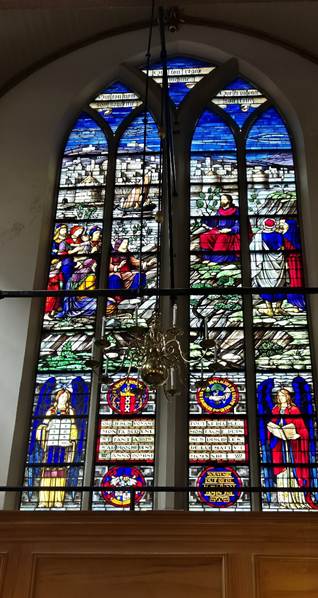
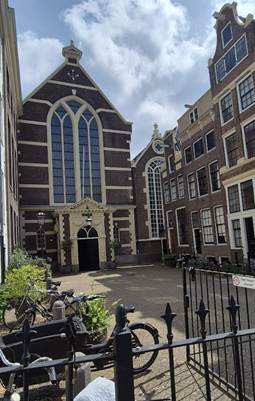
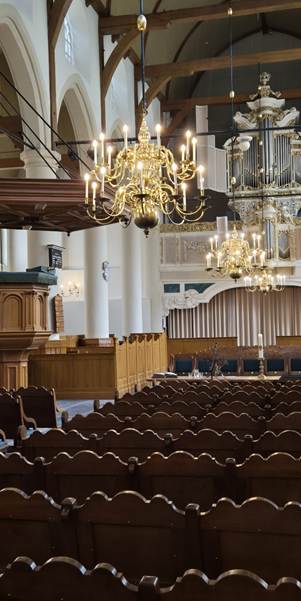
At 159 Walenpleintje
in Amsterdam stands one of the oldest Walloon churches in the Netherlands.
Originally, this listed national monument served as the chapel of the Catholic
St. Paul Brothers' Monastery.
In 1577, the predominantly
Protestant city government confiscated the chapel. In 1586, the building
acquired its lasting purpose as a church for Walloon Reformed refugees who had
fled from the Southern Netherlands.
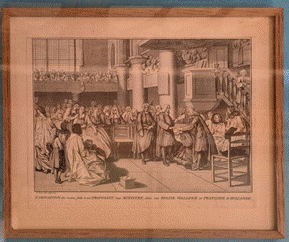
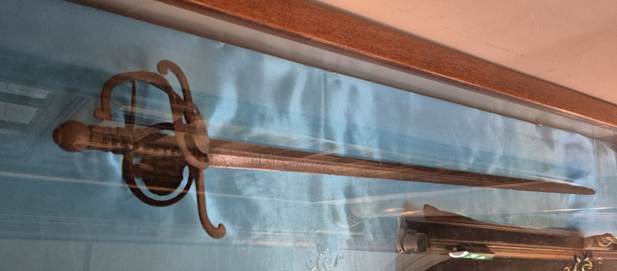
The display case contains a number
of valuable artefacts, including a sword that was used in France during the
Wars of Religion in the struggle against the Catholics.
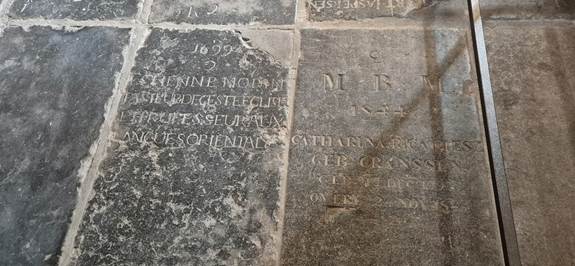
Several historic gravestones can also be found inside the church.